The post MGB Turbo Charged Roadster Special appeared first on Vintage and Classic Car Competitions.
]]>The origin of the GB dates all the way back to 1947 actually and was eventually produced in 1962 by the British Motor Company. It had one of the longest runs, between 1962 and 1980 and was one of the first vehicles to be made in a unitary structure, or really one piece, which was a better option for safety reasons. The MGB series itself wound up being popular because of its lightweight design, keeping costs low and the speed up.
Safety was a big concern in these roadsters, and MGB helped to implement crumple zones, helping to safeguard the drivers and their passengers during an accidental impact. Keep in mind it may not have as many modern safety features in cars these days, but in the 60s and 70s era of roadsters, it was definitely a mass improvement.
This also came about with the 1975 model that would also integrate some of the earliest power breaks into the car as a standard safety measure. Compared to non-servo assisted breaks that required drivers to exert extensive amounts of pressure on the breaks themselves and not always being able to slow down the car.
The original engine and manufacturing easily had the MGB series get up to 60 mph in just a little over 11 seconds. Unfortunately, it was such a powerful engine that the 1975 model in the United States actually had to be made a bit weaker due to the emissions and overall power of the engine. Unfortunately, US legislation modified construction for some of the cars that would add a rubber bumper in 1974, eliminating the chrome accents that made this one of the more stylish options.
Another unique cost-saving measure to occur with the 1975 model specifically was the elimination of the anti-roll bar which was part of the suspension for other models and used to support fast turns. That didn’t stop these roadsters, and eventually, in later models, the anti-roll bar would make its way back into manufacturing.
With that said, the look of the MGB roadsters has that premium classic blend of driving the car through the countryside for the long weekend or even when riding through a bustling city, showing off the power of the engine. It’s still such a popular car when it comes to collector circles that there are plenty of original spare parts available.
Yet when it comes to modifications, the MGB Roadster series is quite adept at accepting non-standard parts, as seen by our 1975 MGB Turbo Charged Roadster Special. Whereas the original torque was around maxed at around 140 NM in 1975 at approximately 2,500 RPM, this turbocharged edition has a massive 333 NM of torque. So not only will you have the ability to feel it when driving, but you’ll also be able to hear it.
While it still holds a 2 litre K series MG engine, it’s been turbocharged with a Garrett turbocharger and has added ventilated disc brakes with Hoyle coil-over suspension units, making this more of a sports car than a roadster. It will drive as you want it to, and you’ll appreciate the restored red leather interior that helps to bring this car back to its appropriate era.
The post MGB Turbo Charged Roadster Special appeared first on Vintage and Classic Car Competitions.
]]>The post Hillclimb Racing! appeared first on Vintage and Classic Car Competitions.
]]>So, what is it exactly?
Hillclimbing, sometimes known as “speed hill climbing”, is where drivers race to beat a specific time established with each track. It’s also considered one of the oldest motorsports out there to this day and has become a global classic as you can find events throughout the United States and Europe, and as motorsports continue their expansion towards the east, more motorist clubs are seeing themselves doing hillclimbing events as well.
How old are we talking about? The first recorded event was in Nice, France, at La Turbie, all the way back in 1897. It was as if the minute cars became mainstream; it was time to race them! Until this day, the oldest Hillclimb in existence, dating back to 1905, is in Worcestershire, England, held at the Shelsley Walsh, which has a current speed record of 22.37 seconds. Of course, the original cars to what they are using today are much different, but the course itself is as it has been since its original run back over a century ago.
Many hillclimbing competitions today are done with more F1 racing types and attract some of the biggest names in the motorsports industry to show off their latest in mechanical engineering and how excellent their race car drivers are.
Why is it so popular?
There are several reasons why Hillclimbing continues to be so popular as it’s more of a race against oneself and can be quite difficult to manage the fastest speed, going uphill, and handling all those corners. Other types of racing are based on laps in a fixed design. Hillclimbing feels more akin to naturally racing and navigating different course types at the same time. These corners are also quite tight, and the tracks themselves are a lot smaller, so the cars that can be on these tracks need to have the right punch and the right sizing.
It’s also an excellent way to recreate some of the classic car events that have occurred with hillclimbing. Those that are collecting motorsport cars, either from a classic era or vintage era, want to show off their mechanical prowess and knowledge of the vehicles through this type of racing. After all, these are sports cars, with engines meant to be pushed to the fastest speeds possible.
Safety first
One thing about Hillclimbing is that it can be dangerous at times, and that’s why those that perform it need to be trained properly in many cases. For highly competitive hillclimbing events, they’ll need to wear the proper flame-retardant clothing just in case. This is a full suite setup from shoes to gloves to a driver suit specially designed. This is also the case when partaking in exhibition events where the majority of classic car hillclimbing events can occur.
Another reason to be safe is to protect the car itself. After all, while they tend to have the right horsepower for an event like this, it can be quite difficult to handle additional repairs due to rare parts needing to be found and the fact that these cars are simply much older. The best part is that as long as you’re part of the right type of club, you should have access to the components, the knowledge, and the expertise to bring your classic cars back to racing levels and take on the next hill climbing event.
The post Hillclimb Racing! appeared first on Vintage and Classic Car Competitions.
]]>The post Why are classic car enthusiasts even a thing? appeared first on Vintage and Classic Car Competitions.
]]>To better understand the popularity of classic cars and the rise in classic car enthusiasts, we want to see exactly what makes a car classic? There is a range of different definitions out there, but basically, the car has to be of a certain age.
If a car starts to be around 20 to 25 years old, it starts to fall into the classic car category.
There are some limitations to that as well, and it doesn’t mean every car that’s older than that is a classic car. There’s a lower limit of cars that are made from 1955 and onward that people deem classic. Anything that goes earlier than that falls into a completely different type of category listing and are known for their rarity and history.
Classic Car Enthusiasts Appreciate the Simpler Time
Nowadays, if a time traveller were to take a look at our cars today, they may feel as if they are science fiction. However, they also may feel as if we’ve made vehicles today simply overcomplicated.
Classic cars are from an era of simplicity with excellent engineering. There’s a driving wheel, a dashboard, and a gear shift. Maybe some might have a radio, but that’s it. That leaves for a more luxurious ride and about enjoying riding the car for what it is. This is as opposed to simply trying to get from point A to point B.
Classic car enthusiasts appreciate the time when style was more important
Actual designers literally created classic cars with the mission to look and feel great, versus how aerodynamic or efficient they were. Classic cars thus look fantastic and timeless in many cases. They were about accentuating the shape to stand out in the case of roadsters. Added to that was taking the time to have fine Italian stitched leather for the seating on the inside, with wooden panels to offset the colouring. Their shapes and styles also made cars look significantly different and more distinct than other cars.
Not as expensive as one may think
You may think classic cars are a huge initial investment and a big money sink with maintenance, but it’s quite the contrary. Yes, some classic cars, especially in the Ferrari region, can be excessively expensive. However, that is the exception, not the norm. In many cases, you can pick up many classic cars for several thousand pounds and well under £20,000.
The maintenance itself is also not that complicated. Several enthusiasts have worked to keep an ample supply of classic car parts readily available, depending on the model’s popularity. Yet since these were not overly complex machines, to begin with, if you’re an amateur mechanic, you should have no issues with keeping it road worthy on your own.
It’s a great hobby
For those who love vehicles in general, it’s a fantastic hobby to view classic cars and acquire and maintain them. You’re able to get a sense of how things were in a different era. You can also enjoy a time when we thought of cars in a different way than simply an engineered workhorse.
The post Why are classic car enthusiasts even a thing? appeared first on Vintage and Classic Car Competitions.
]]>The post What to know about when it comes to the Triumph TR6 appeared first on Vintage and Classic Car Competitions.
]]>
What to know about when it comes to the Triumph TR6
One of the reasons the Triumph TR6 is so unique is that it had the largest production run of any of the Triumph cars before it. With over 91,000 vehicles, it was one of the more successful options out there. Yet most of these cars were exported and sold out of the manufacturer’s home country in the U.K. Only around 8,000 were sold solely in the U.K.
A long production run
The Triumph TR6 was initially manufactured in 1968, with the release date in 1969. It ran for seven years through 1976. Due to the production of so many cars, there’s still a large and ample supply of spare parts available. This is especially in the U.S. which was also the primary market at the time. This makes it a good option for those that are just starting to get into classic car collecting and refurbishment.
It’s always a good idea to join Triumph clubs as a way to ensure you’ll get the correct type of advice and parts needed. Again since this is a classic car, the maintenance required is in the amateur mechanic category.
A different style
Giovanni Michelotti designed previous Triumph models. However, with the TR6, it took a different approach with the outer frame. It took on a blockier German design by Karmann.
People still class it as a G.T. roadster, but with more defined masculine lines and an overall look that is common with German stylings. It was a more modern style at the time and helped show just how powerful the Triumph TR6 was to its predecessors.
Under the hood of the Triumph TR6
There were only slight differences between those Triumph TR6 models that had shipping to the U.S. and those for the European market. Those for the European market had an irritable Lucas mechanical fuel injection system, whereas the majority of the cars produced for the U.S. market had the carbureted version. This much more reliable option came at the sacrifice of power.
Yet all models had a 2.5-litre six-cylinder engine with a 4-speed manual transmission. As a result, they had one of the fastest accelerations at the time, with the car flying from 0 to 60 in a mere 8.2 seconds.
Pricing of the Triumph TR6
The Triumph TR6, compared to other cars within that period and other Triumph models, is relatively common. This is due to its huge production run and the quality that was behind its manufacturing.
They’re, of course, lower-priced in the States due to a much larger overall inventory. Later models that had the hardtop option and other amenities such as an A.C. and additional trimmings could fetch a higher price, but nothing compared to rarer models.
Yet this is a robust item for any collection and is also one of the easier Triumph models to maintain. This is partly due to being able to reliably find the parts. But also because the Triumph TR6 corrected a lot of mistakes and engineering issues in older models that made it so popular in its heyday and now for those collecting them.
The post What to know about when it comes to the Triumph TR6 appeared first on Vintage and Classic Car Competitions.
]]>The post All about the Triumph TR4 appeared first on Vintage and Classic Car Competitions.
]]>
All about the Triumph TR4
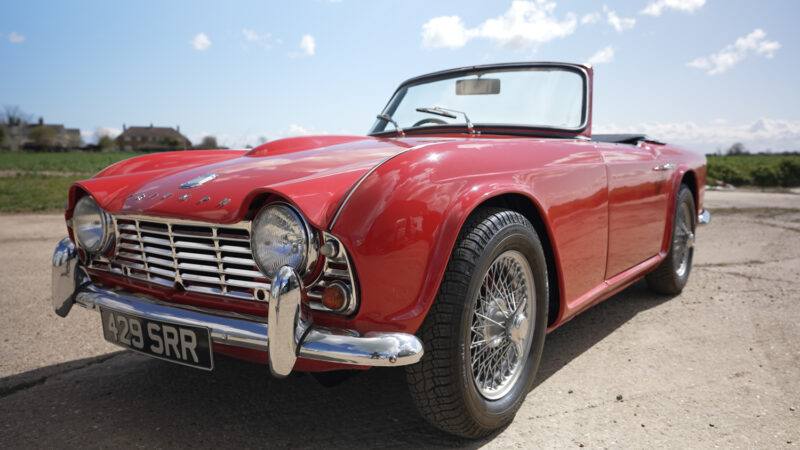
Another popular classic car out there is the Triumph TR4 by Triumph Motors. Its original run was from 1961 through 1965. After that, an upgrade version called the TR4A had production at the Triumph Motor Factory from 1965 to 1967. It’s another beautiful mid-1960s classic British roadster that should be in any veteran classic car collector’s inventory.
A look at the design of the Triumph TR4
When you first look at the Triumph TR4, you will immediately recognize the Italian flair it has. This comes from famed Italian designer Giovanni Michelotti. It was one of his earlier attempts to make the design remain sleek but give it a boxlike design that became a classic over time. The shape of the chassis was similar to the previous model, the Triumph TR3, but with a wider front and rear.
Although a sports car convertible with a roof you can put away, this became one of the earliest cars that had the option of getting a hardtop. That hardtop came with a glass rear window, but you could still detach the entire component of it. It wasn’t one of the earliest, but the first-ever to have this type of detachable hardtop roof. Also, it would later have use in cars such as the Porsche 911 and other similar sports cars of our modern-day era.
Inside, the dashboard is beautiful with the era of the appropriate high-quality leather seating. Also a variety of beautiful wood-panelled dashboards that add that nostalgic classic look.
Rarity is an understatement
There are very few of these models still remaining in the world. The last estimated count came in at just under 1,000 units for an exceptionally beautiful car. Especially if you’re able to get it in that classic red that is common on GT sports cars. Due to the rarity, the design and the quality of the car, the average price of the series is around $24,000. Some 1964 models also go up as high as over $90,000!
It also had one of the lowest production runs for Triumph, and its TR series, with the run just being over forty thousand cards. In contrast, the TR3 had a production run of nearly 75,000 cars. The later models, such as the TR6, produced just under 95,000 cars. This makes the TR4 rare from the start.
How does the Triumph TR4 run?
It came with a four-cylinder engine and had a top speed of 165 km/h. The 4-cylinder makes it a 2138cc engine, and the power of it is just over 100 horsepower (at 104) with 4600rpm. In addition, it upgraded the steering from the TR3 with a smoother rack and pinion design.
It also had synchromesh on the first gear, which was a big game-changer for manual drive cars. This made it a lot easier to get into first, especially when you were at the appropriate speed. This was the first time it ever was used in a Triumph Motors car, and in fact, in any British made car at the time.
Don’t let the bulkier build and design fool you that this is anything but a roadster or sports car, as when you get that engine running, you’ll easily be able to feel and hear it.
What were the major differences between the TR4 and the TR4A?
While we’re doing a deep dive into the TR4 – production of it stopped in 1965, and for two years, the TR4A was built. A significant difference comes from an aesthetic one, where there’s a shinier chrome like grille in the front of the car just residing above the bumper.
When we leave the aesthetics, we can move to the frame of the car, and the TR4 is a bit sturdier than its predecessor. It also incorporated an independent rear suspension to the TR4A, making it a safer and smoother ride.
What are the significant risks with this car?
As with all classic cars, and with the Triumph TR4 not being different, rust can be a huge deal. These cars are about 60 years old, and back then, anti-rusting solutions weren’t as common as they are today.
So you’re going to always want to confirm and check through a professional inspection to ensure there’s no rust build-up. If left alone, as you may be aware, it’ll start to spread and end up eating your entire car. Ruining the selling process or if you just want to take it for a spin on a lovely sunny day.
You’ll also want to check the chassis for any type of corrosion, whether rust or something else. This is a routine inspection, not just a one-time inspection and then let the car be put on display. Some other checks you want to look into are the wiring and the shocks.
Unless they’ve been recently replaced, the wiring could have corroded, and the shocks could be spent. This makes it faulty and unsafe to drive on the road. It shouldn’t cost much to replace and even modernize some of the parts for an overall improved experience.
In the end
When it comes to classic roadsters and classic cars, the Triumph TR4 does not disappoint. It’s a statement piece of an era long gone. Also, the design or construction wasn’t poor, so there shouldn’t be any real major issues.
Cars back then were a lot simpler to build and maintain. Therefore those that see themselves as wanting to start to become an amateur mechanic or simply tinker with the car and get it working right again, this is a great model to be able to work on and restore. That is if you’re able to find it.
Don’t forget if you’re keen on finding these cars, or admiring them at your local competitions, then always take a look here at our site. We are always pushing events for classic car collections as well as running competitions to see who’s maintained their classic car the best. So you’ll be able to appreciate these legendary beauties in person.
The post All about the Triumph TR4 appeared first on Vintage and Classic Car Competitions.
]]>The post Why are classic cars so desirable? appeared first on Vintage and Classic Car Competitions.
]]>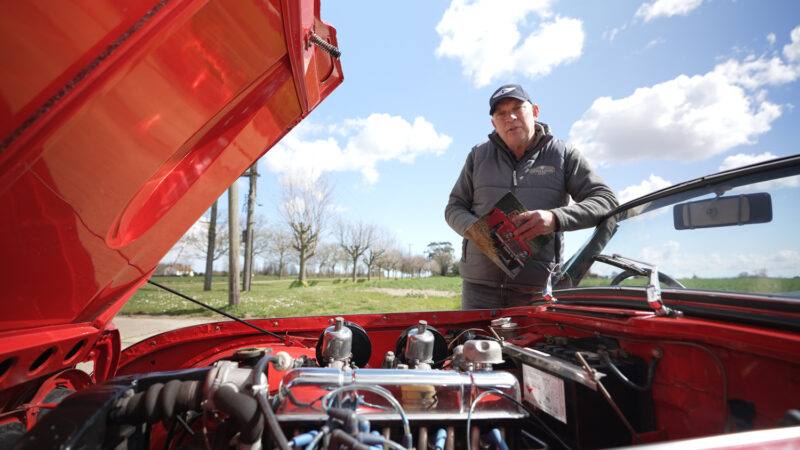
In a world where you can recall information at our fingertips and we transition towards digital worlds, there’s still growing respect and desire for classic cars.
Whether it’s a timestamp in the past or something that looks alien now based on how modern cars look, classic car collecting is picking up heat. It also attracts a variety of different types of hobbyists with their own motivations that make the world of classic cars so exciting.
Ok – how rare are we talking about here?
There are actually several endangered car lists out there because, at the most, there are only a few to a few dozen left of these cars. That makes them extremely rare. Some of them are also not the cars that you may think. You may be picturing the classic Ferraris or Porsches. Instead, many mainstream cars out there have become classics, such as the 1983 Triumph Acclaim L, where there are only 12 of them remaining.
Or you can look at near legendary vehicles such as the Triumph TR5. The TR series were designed as roadsters and sports cars. However, many of them had a touch of Italian flair through the same designer who designed Ferrari and other classic world-renowned cars, Giovanni Michelotti.
So when you see a TR type car, it will immediately transport you back into an era cross country trips out in the beautiful European countryside. Yet when it comes to the TR5, just under 3,000 cars had production. However, it was still a treat at being a Lucas fuel injection system. One of the earliest at the time, and helping to give it a speed of up to 200 km/h.
So what makes classic cars collectable or worth so much?
First of all, just with one example above, these classic cars are historical items. They are products of mechanical ingenuity and have their place in time for several reasons. Either being a first in their time, being of superior or unique quality, or being such a catastrophic failure that mechanics and vintage car collectors alike try to collect them to remedy the issues that came from these poor production runs.
Another thing that makes these classic cars worth so much is that they are extremely rare in some cases. But, of course, the rarity itself helps bring up the price. This is especially the case for popular models such as the Ferrari 465 Daytona approaching $1 million in value and price. Yet it’s not just the car’s rarity but also how rare the car parts are themselves. That’s right, and the car parts also become a factor because they simply no longer produce them.
Cars that people consider classic in this day and age were much more mechanically simpler than today’s cars. That meant it was easy for many amateur mechanics to spring up overnight, and it was easy to replace these rudimentary cars.
There were no such things as a catalytic converter, which wasn’t used widespread until the mid-1970s, and this made the parts easy to swap out. Yet as cars became more complex, these parts were no longer necessary. Also, no one, not even classic car companies or societies, made them.
This could be a huge difference in the price point whether the car is able to run or not. And it was simply regarding whether the rare piece is found for the car to handle the necessary repairs to get it operating again.
Yet are classic cars a good investment vehicle?
And this is where we expand our group of hobbyists and combine them with a group of alternative investment people. So the short answer is yes, and classic cars can be a great alternative investment option. Yet it’s essential to keep several things in mind. First, if you’re looking at it as an investment, you cannot really use or basically enjoy the car. This is because any driving will reduce the car’s value due to continuous wear and tear.
In addition, there are a lot of ancillary fees such as insurance, storage, and the occasional maintenance and repairs that may need to happen. This will eat into the potential profits. So it’s always a good idea to have a timeframe of when you’re thinking of selling the car.
The final area to look at with classic cars is to understand that not every old car is vintage or collectable or worth much more than its original MSRP when it was first produced.
That means there’s extensive research going into this type of investment. So even if you grab yourself a Ferrari from the 1970s, it won’t be worth much. Yet if you find yourself viewing a Ferrari Dino GTS from 1973, that car is valued at over half a million dollars easily, all depending on its current status.
Look In The Right Places
The final area to look into is that even though you have something valued at a high price, it’s still considered an alternative investment, and it can be hard to sell. So you’ll need to not only find enthusiasts (either through adoration of classic cars or as an investment opportunity) with the means to purchase your classic car whenever you want to sell it.
Basically, the market, even though growing and gaining more interest, is a lot smaller, and it can take time to sell correctly.
In the end
With that said, vintage cars are a breath of simplistic engineering and high-quality designs that are timeless and classic and are a true piece of history for many countries and even on a global scale. As a result, they will continue to be of interest to many. Therefore, it’ll be a good idea if you’re considering venturing into this world to make sure you stock yourself up with the appropriate amount of knowledge.
A good way to begin your journey into vintage cars and understand them is to see them and basically see what all the fuss is about. By heading towards one of our competitions, you’ll be able to find yourself surrounded by like-minded people who’ll gladly show you the ropes when it comes to vintage cars.
The post Why are classic cars so desirable? appeared first on Vintage and Classic Car Competitions.
]]>The post Things you should know about the Triumph Stag appeared first on Vintage and Classic Car Competitions.
]]>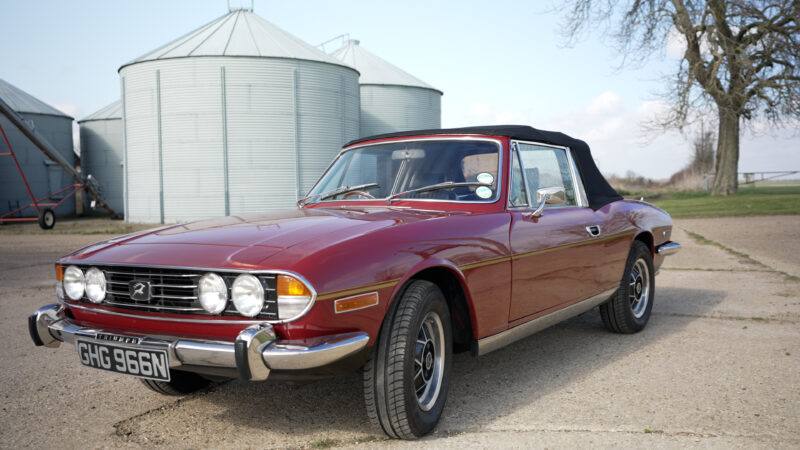
There’s no better entrant than the Triumph Stag for those who are either established classic car enthusiasts or, are starting to dip their toes into these waters. Originally having production between 1970 and 1978 from the Triumph Motor Company, its objective was to be a sports car and a road trip car for the European market. It has a storied history that still makes it one of the most sought-after classic cars even today.
Legendary design
One of the primary reasons for its desirability is that the design of this car is so classic 1970s. Its design was by Italian stylist Giovanni Michelotti. He didn’t know it at the time, but it would make this car a staple timeless classic. It exudes exactly the type of car that would be driving through the beautiful backdrops throughout Europe on a summer excursion. Also, one of it’s objectives was to compete with the Mercedes Benz convertible at the time.
The interior gives off a vintage vibe with attention to detail. Offering attractive items such as wood panelling which was popular at the time. If you’re able to get the original production, the seats are extremely comfortable and they look fantastic as well.
Not the best manufacturing
Ironically, the design was one of the best in the era. However, poor quality control had an adverse effect on the manufacturing of these cars. Deemed a car to ride out in the open, it was prone to overheating. It was also too heavy in comparison to its relative counterparts to even have consideration as a proper sports car.
The engine itself had a design way ahead of its time. But when it came to production, revisions and additions were made to the 3 litre V8. These included the expansion tank and a flimsy chain that was prone to excessive wear and tear.
This meant an engine too big for the car and not enough coolant. In turn, this became one of the major complaints about the Triumph Stag. Yet as every good classic car enthusiast knows, there are plenty of ways to fix this beauty and have it growling like a tiger and still look beautiful.
The Triumph Stag is still rare
Currently, there are only around 1500 remaining on record that exist. There aren’t many choices to choose from, but there are still some that are in the original racing red colour which is a dream find.
With updates to fix some of its manufacturing and quality control issues, it makes the Triumph Stag one of the most sought-after classic cars on the market out there today. That’s why it can still fetch a decent penny, from several thousand to over £19,000. This is all depending on the condition it’s in, however, versus how much of the original car is there.
So, if you ever find yourself looking at one of these beauties and you’re in the market to add to your car collection, snap one of these up when you can. They’re great to work on and when they’re road-ready, you’ll be using them as your primary mode of transportation whenever you can.
Check out more information about classic cars and showcase your Triumph Stag here.
The post Things you should know about the Triumph Stag appeared first on Vintage and Classic Car Competitions.
]]>The post 1967 MGB roadster ⭐⭐⭐⭐⭐ appeared first on Vintage and Classic Car Competitions.
]]>David
The post 1967 MGB roadster ⭐⭐⭐⭐⭐ appeared first on Vintage and Classic Car Competitions.
]]>The post Touring with Morgan V6 ⭐⭐⭐⭐⭐ appeared first on Vintage and Classic Car Competitions.
]]>Tim & Wendy the co-owners were great too, happy to answer any questions and recommend places to visit. Will look forward to coming back again and trying one of the MG’s.
Thanks for making our special day one to remember.
Steve
The post Touring with Morgan V6 ⭐⭐⭐⭐⭐ appeared first on Vintage and Classic Car Competitions.
]]>The post 10/10 experience ⭐⭐⭐⭐⭐ appeared first on Vintage and Classic Car Competitions.
]]>Absolutely amazing experience! Can’t wait to get back and do it all again with a different car! The Midget was absolutely stunning and my boyfriend had the best time driving it, while I really enjoyed being passenger. The countryside around is the perfect location so we were able to really get to know the car and just enjoy the day.
The guys there are brilliant and so so passionate about the cars. So nice to be spoken through the ‘perosnality’ of the car before driving off in it for the day.
10/10 experience would highly recommend! Can’t wait to go back next year.
The post 10/10 experience ⭐⭐⭐⭐⭐ appeared first on Vintage and Classic Car Competitions.
]]>